
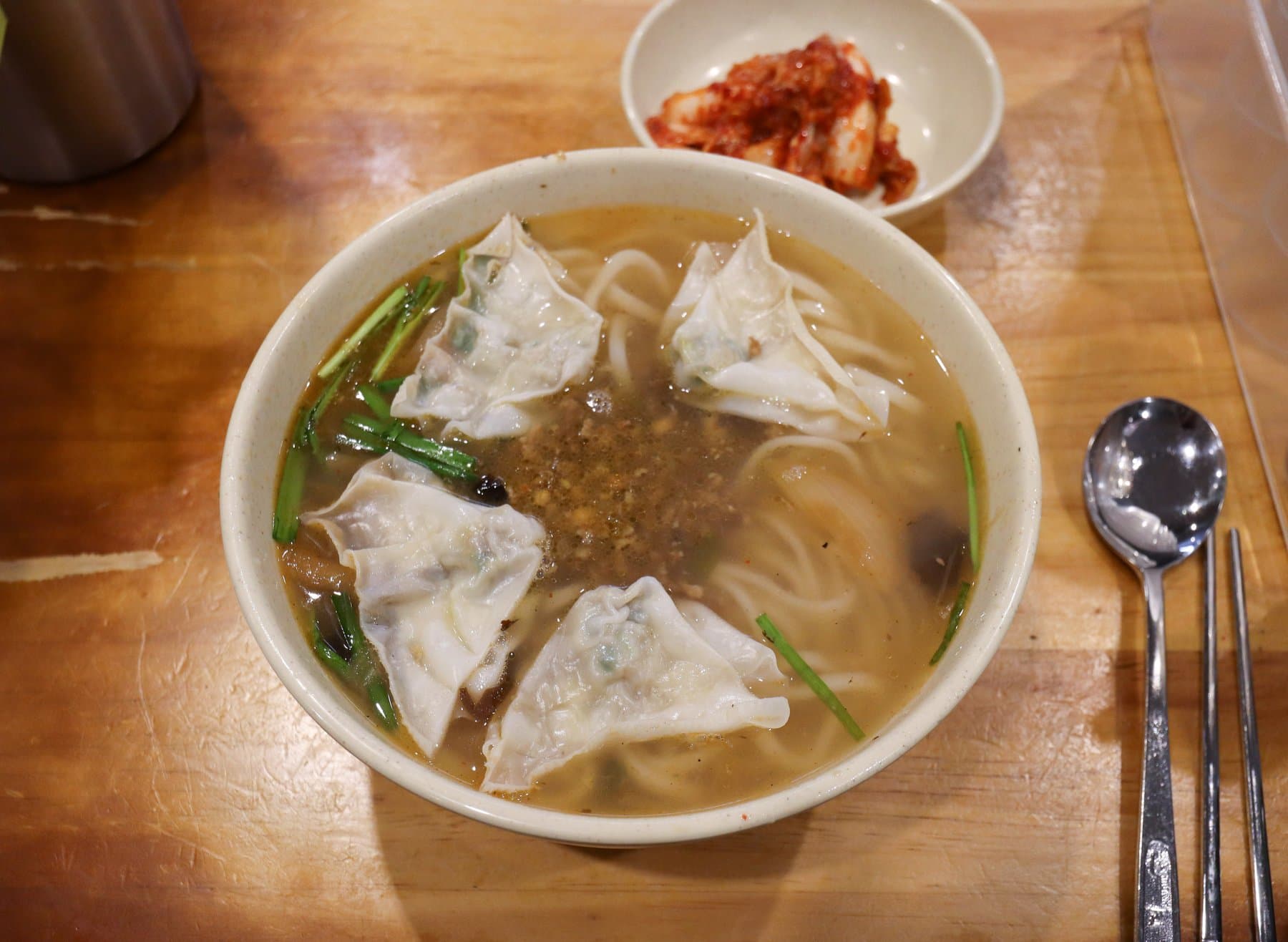
Photo by Mobius6. Licensed under CC BY-SA 4.0. Kalguksu at Myeongdong Kyoja; resized for web.
Seventeen Michelin-Listed Korean Restaurants Failed Government Food-Safety Inspections
Ministry data covering 2023–2025 show 21 Food Sanitation Act violations at Guide restaurants, from skipped hygiene training to a two-star kitchen referred for serving unapproved ants. A Michelin listing rates the meal, not the ministry’s checklist.
August 6, 2026
A Michelin listing can fill a reservation book overnight. It does not replace a Korean food-safety inspection.
On August 5, 2026, lawmakers released Ministry of Food and Drug Safety data showing that 17 restaurants listed in the Michelin Guide Korea were cited for Food Sanitation Act violations between 2023 and 2025. The tally runs to 21 cases across starred rooms and Bib Gourmand favorites. Most look bureaucratic: missed hygiene classes, late paperwork, handling rules. One case left the inspection file and entered a courtroom. Evett, a two-star restaurant in Seoul’s Gangnam district, was referred to prosecutors over dried ants used as a garnish, an ingredient Korea has not approved for food.
The story that matters is the collision. Michelin judges cooking. The ministry judges kitchens, ingredients, and paperwork. Treating a red plaque as a health certificate is a category error diners keep making.
What authorities looked at
The figures come from an analysis by Rep. Seo Young-seok of the Democratic Party of Korea, a secretary of the National Assembly’s Health and Welfare Committee, based on materials the ministry submitted. Korean and international outlets including The Korea Herald, The Korea Times, and The Straits Times reported the release the same day.
Separately, the ministry said that in June 2026 it ran special inspections of 1,720 popular restaurants nationwide and found violations at 45 of them. That sweep included highly rated rooms, but it is a wider net than the Michelin-only count. Seo’s report uses three years of Michelin-listed citations to argue that fame can become a management blind spot if regulators lean too hard on reputation.
Seventeen restaurants, twenty-one citations
The named set mixes destination fine dining with famous noodles and barbecue. Reporting lists Myeongdong Kyoja, Gwanghwamun Mijin, Pildong Myeonok, Geum Dwaeji Sikdang, Hapcheon Gukbapjip, Kwonsooksoo, Mingles, Exquisine, Gwanghwamun Gukbap, Bao House, Evett, Yakitori Onjeong, Arp Studio, East Seoul, Myeon Seoul, Egg & Flower Cheongdam, and Sosuhun, among others depending on romanization.
By category, the Korea Times breakdown is blunt. Failure to complete mandatory hygiene training led with seven cases. Unreported changes to business registration accounted for five. Violations of food standards and specifications, including foreign matter in food, made up four. Improper sanitary handling added three. Missing required employee health examinations added two.
Most outcomes were light: corrective orders, administrative fines, or facility repairs. Myeongdong Kyoja, the dumpling-and-noodle landmark in central Seoul, was cited on food standards for three consecutive years. Gwanghwamun Mijin repeatedly missed business-registration change reports. Those two were the only restaurants in the set that drew administrative surcharges, according to The Korea Herald. The rest of the list largely stayed in the fine-and-fix lane.
Why Evett’s ants became a legal case
Evett is the exception that explains the rule. Korea currently approves a short list of insect species for food, commonly described as about ten kinds, including certain grasshoppers, crickets, and mealworms. Ants are not on it. A business that wants to serve another insect can seek temporary approval after safety and processing review. Evett, prosecutors say, did not secure that approval.
Ministry investigators noticed diner posts and photos of ant-topped dishes, then opened a case. Court and ministry reporting allege that from 2021 into early 2025 the restaurant imported dried ants from the United States and Thailand by international mail and used them for acidity on desserts such as a sikhye-based sherbet, typically a few ants per plate. Prosecutors have put the scale near 49,000 ants across roughly 12,200 servings and about 120 million won in related revenue. They have also cited ministry findings that heavy-metal levels in the ants ran far higher than in approved edible insects. Those numbers remain part of an active case, not a final verdict.
In July 2026 hearings, prosecutors sought a one-year prison term for the operator and a 20 million won fine for the operating company. Defense counsel has argued that ants were optional for guests who declined them and that restaurants abroad use ants as ingredients. The legal question in Seoul is narrower: was the ingredient authorized under Korean food law?
What Michelin recognition does and does not certify
Michelin’s published criteria for stars lean on the plate: quality of ingredients, mastery of flavor and cooking techniques, the personality of the chef in the cuisine, value for money, and consistency over time. Bib Gourmand marks strong cooking at a friendlier price. None of that is a substitute for Korea’s Food Sanitation Act, employee health checks, or ingredient approvals.
Guides can withdraw recognition after scandals, and diners can vote with their feet. Regulators still own the checklist that decides whether a kitchen may open tomorrow morning. The August data are a reminder that starred and Bib rooms sit inside the same legal frame as every other restaurant, even when the dining room feels like a different world.
Deference, experimentation, and what comes next
Experimental fine dining often borrows foraged or unfamiliar ingredients to signal originality. That impulse is not illegal by itself. Skipping the approval path is. The Evett file shows how quickly a garnish that reads as avant-garde abroad can become a Food Sanitation Act problem when the species list is short and the paperwork is missing.
Seo has urged the ministry to inspect high-profile restaurants more regularly and to harden penalties for repeat violators. Whether that becomes policy is a political question. For readers, the practical takeaway is simpler. A Michelin listing is a useful map of ambition and craft. A clean inspection record is a different document. In Korea this week, seventeen Guide restaurants learned, again, that the second one still matters.