
Seoul: A 72-Hour Food Itinerary
Three subway corridors, three meal formats: market graze, café afternoon, BBQ or chicken at night.
Updated July 23, 2026
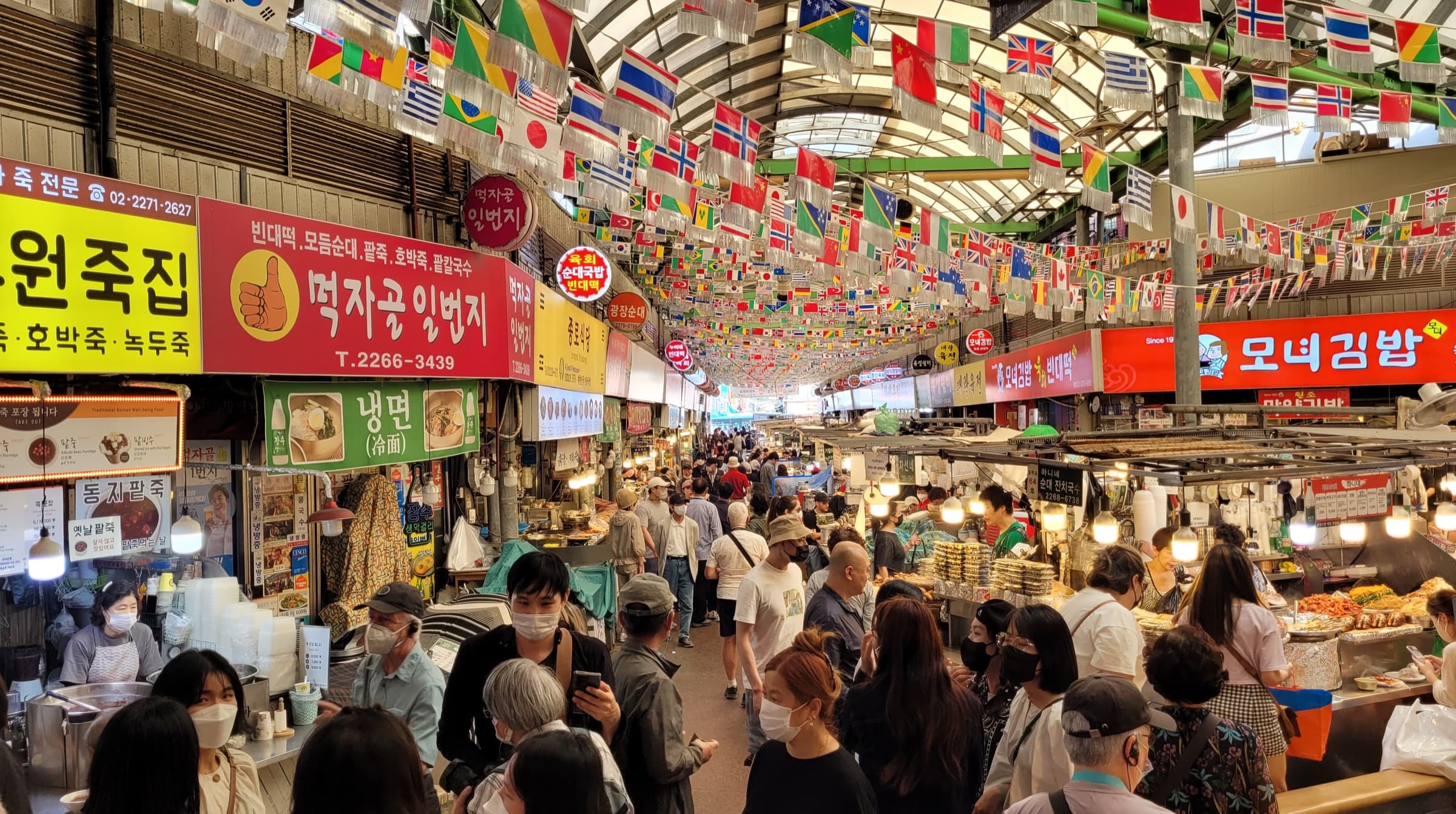
Photo by Bgag. Licensed under CC0 1.0. Resized for web
Seoul rewards a first food trip when you eat by format and keep each day on one subway corridor. Market graze in the morning. Café walk in the afternoon. Grill or chicken at night. Cross the Han River twice in one day and you spend the trip on trains instead of at the table.
This is a three-day rhythm, not a ranked restaurant list. Famous rooms can wait for a second visit. The useful first map is how the city eats when you stay walkable once you arrive.
How to pace Seoul food
First-timer rules
- One corridor per day: Jongno, then Mapo west, then east or south
- Two sit-down meals plus one graze is enough for most days
- T-money for subway and buses; Naver Maps or KakaoMap for walking (Google routing is unreliable here)
- Cash for market stalls; cards for most restaurants and cafés
- BBQ portions are often sold by serving with a two-person minimum; share the grill
Ask for less spice when you need it. A useful phrase is 덜 맵게 해주세요 (deol maepge haejuseyo). Unmarinated pork with sesame oil and salt is a gentler BBQ path than leaning on every chili banchan. Catchtable Global helps when you specifically want a booked dinner. Most casual grills and markets do not need a reservation.
Day 1: Jongno corridor
Start in the old-city middle of Seoul. Choose one lunch market entry, not three.
Gwangjang Market is the clearest first graze: Jongno 5-ga Station (Line 1) Exit 8, then into the food alley. Look for bindaetteok on the griddle, mayak gimbap, jeon plates, and makgeolli if you want a midday pour. Food stalls often run later than the dry-goods hours; VisitSeoul lists the food alley into the evening. Bring cash in small bills. Point, sit, pay, move.
Namdaemun’s Kalguksu Alley (Hoehyeon Station, Line 4, Exit 5) is the better pick if you want a bowl of knife-cut noodles and barley-rice sets with office-lunch energy. Tongin Market’s yeopjeon dosirak (Gyeongbokgung Station, Line 3, Exit 2, then a short walk into Seochon) is a modern coin-lunchbox ritual, strong on weekdays and closed some Mondays. Pick one of these three for lunch.
Afternoon, walk Ikseon-dong’s hanok café alleys from Jongno 3-ga (Exits 4 or 6). The tiled roofs and narrow lanes are a 1920s planned neighborhood now filled with dessert shops and coffee. Keep it light. Evening, stay in Jongno for table BBQ and makgeolli near Jongno 3-ga. Old alley grills suit a first night better than a long Gangnam reservation.
If Gwangjang was not lunch, you can use it as an early evening snack course before BBQ. Do not order a full market feast and a full grill dinner on the same stomach.
Day 2: Mapo west corridor
Ride west toward Hongdae without treating Hongdae as the whole day. Late morning, Mangwon Market (Mangwon Station, Line 6, Exit 2) is a residential market with snack stalls and an easy path toward Mangwon Hangang Park if you want a picnic mat later. Then walk the Yeonnam stretch along the Gyeongui Line Forest Park toward Hongik University Station. Cafés here are calmer than the Hongdae neon core.
Evening is for samgyeopsal alleys or chimaek, fried chicken and beer, around Hongdae. Portions are shared. Arrive before the post-work crush if you can. Street snacks after are optional, not required. Subway runs late but not forever; Kakao T covers the last stretch if you miss the last train.
Day 3: a ride worth taking
Morning belongs to Seongsu on Line 2. The district’s converted warehouses and factory bones made it a café destination; Cafe Onion Seongsu is the widely documented landmark in an older industrial building, not a ranked “best coffee in Seoul.” Go early on weekends if you care about the queue. Pair with a light walk toward Seoul Forest if you still have legs.
Afternoon, eat lightly and rest. Evening, choose one big dinner format:
A) Gangnam-area hanwoo or galbi dining, where reservations help on weekends. B) Noryangjin Fish Market: buy seafood downstairs, then eat upstairs as hoe, grilled fish, or maeuntang. Lines 1 and 9 serve Noryangjin Station.
Do not stack premium BBQ and Noryangjin on the same night. One ritual is enough.
To start, pick Day 1’s lunch market tonight and leave the rest flexible. Seoul gets easier once you trust one neighborhood per block of time.