
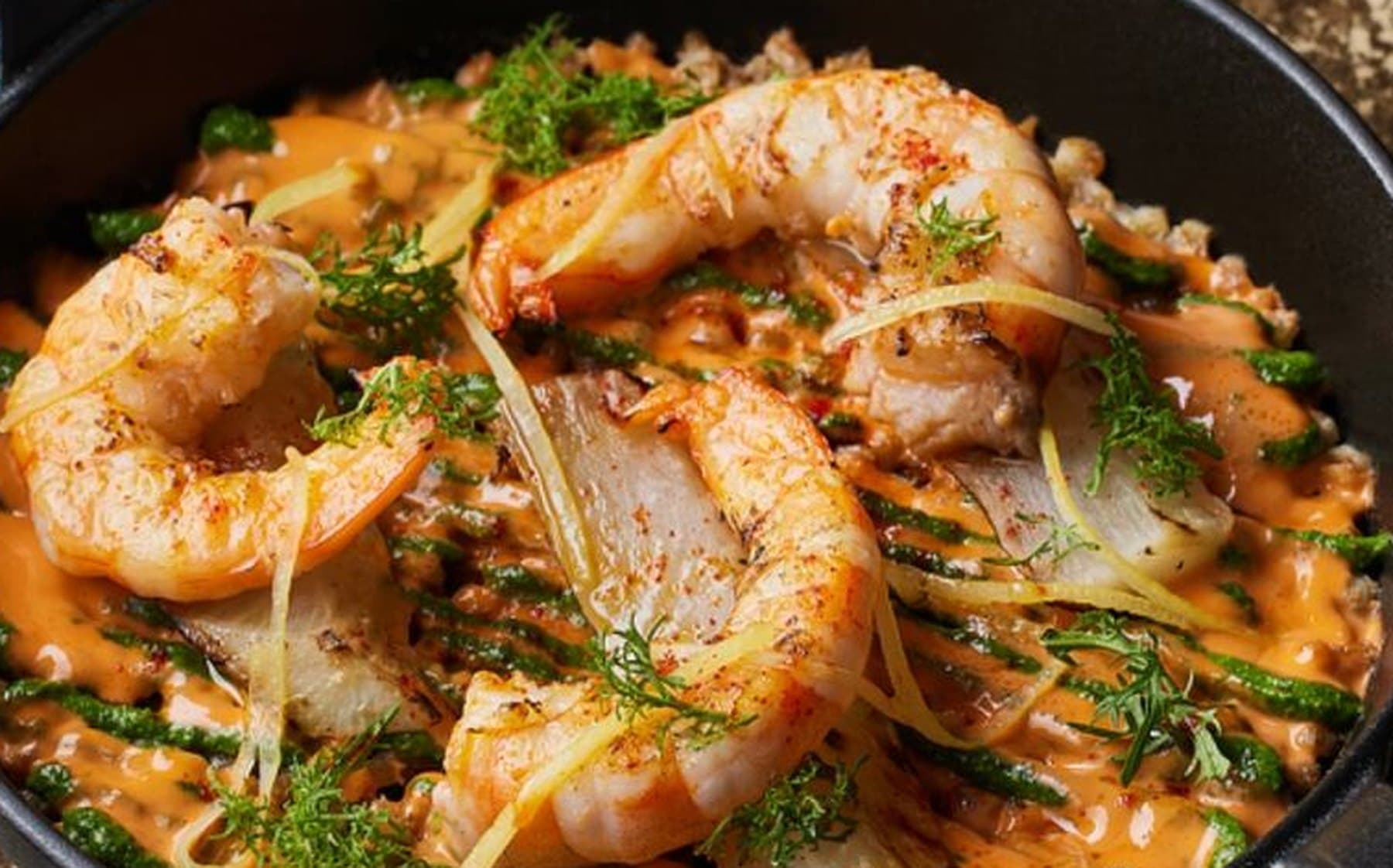
Photo by Sapid Seoul. Licensed under Editorial use. Courtesy of Sapid Seoul via Chosun Ilbo coverage; cropped and resized for web. Dish reported as whole wheat with shrimp and radish.
Sapid Seoul Brings Ducasse’s Vegetable Cooking to Itaewon
Alain Ducasse’s casual plant-forward room opens under Wooyoungmi’s flagship, cooking mostly Korean produce at neighborhood prices.
July 24, 2026
Seoul already knows how to cook vegetables with conviction. What changed in May is who showed up to join that habit.
Alain Ducasse opened Sapid Seoul in the basement of Wooyoungmi’s Itaewon flagship, a casual naturalist room modeled on Sapid Paris rather than a palace tasting menu. Dishes land in the ₩20,000 to ₩40,000 range. More than 80 percent of the ingredients, Korean coverage says, are domestic. In mid-July, Ducasse visited the kitchen himself and told Chosun Ilbo he did not need to squeeze into Seoul’s already crowded fine-dining lane.
A Sapid, not a shrine
Sapid, from the French for something that has taste, is Ducasse’s project with chef Romain Meder for cooking that stays lighter on fat, sugar, and salt while still feeling generous. The Paris room leans on vegetables, grains, and seafood. Sapid Seoul brings that format to Korea for the first time outside Paris.
The point is accessibility. Ducasse’s empire is famous for starred rooms. Sapid is the opposite bet: a place you might book on a weeknight, with plates built around plants and the sea. Chosun’s July gallery showed dishes such as whole wheat with shrimp and radish, mushrooms with hemp tofu and hazelnut, green asparagus with egg and cabbage, and scallop with salsify and mustard. The kitchen uses fish more readily than meat when it wants animal protein.
Korean produce, French hand
Local reporting is consistent on sourcing: a large majority of ingredients come from Korean farms and small producers, with the menu shifting by season. Kimchi appears not as a tourist garnish but as a working flavor. In a May Chosun piece, Meder described folding kimchi into French technique, including powdered and seasoning forms beside a blanquette-style sauce.
Ducasse, speaking in July, said he believed Korean diners would understand vegetable cooking at least as readily as Parisians. He framed the Seoul menu as French cooking simplified around ingredient flavor, using Korean products rather than importing a frozen idea of haute cuisine.
Under Wooyoungmi’s flagship
The address matters. Sapid Seoul sits under Wooyoungmi Itaewon, the designer’s flagship at 34-1 Itaewon-ro 27-gil in Yongsan-gu. Coverage credits Wooyoungmi’s team with the room’s lighting, tables, and staff uniforms. Korean press also notes it as Ducasse’s second major restaurant collaboration with a fashion house, after Beige Alain Ducasse Tokyo with Chanel years earlier.
The same July trip put a Ducasse chocolate counter into Terra Rossa’s Gangneung flagship café, a smaller side door into Korea. The main news for diners remains the Itaewon basement: a French star choosing Seoul for vegetable-forward cooking at prices that sound like a neighborhood meal, cooked mostly from Korean fields and waters.