
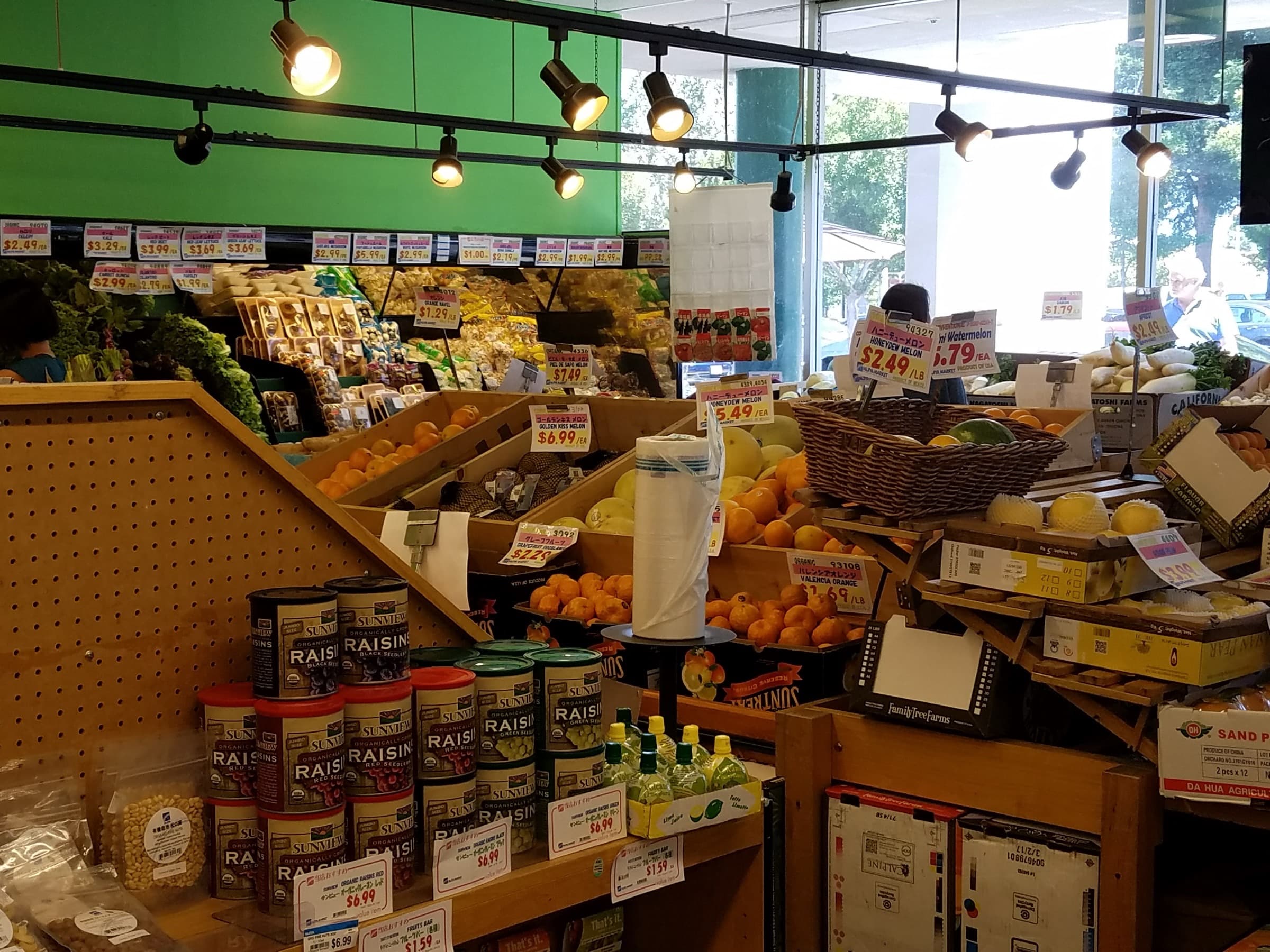
Photo by Mark Yasuda. Licensed under CC BY-SA 4.0. Resized for web
The Grocery Store as Cultural Anchor
How Asian supermarkets hold a community together: produce, pantry aisles, and the people you keep running into.
June 12, 2025
Walk into a big Asian grocer on a Saturday and you can feel the neighborhood before you fill a cart. People comparing greens. Kids trailing toward snacks. Someone pausing at the fish counter the way other shoppers pause at a bakery window.
These stores are retail, yes. They are also meeting places, hiring floors, and proof that a community has room to cook the way it wants to cook. The produce section alone tells you who lives nearby: daikon next to napa, long beans beside Thai basil, citrus priced for a week of dinners rather than a single garnish.
Beyond the ethnic aisle
In a conventional supermarket, Asian ingredients often live in one compressed corridor. In an H Mart, a 99 Ranch, a Nijiya, or a regional Vietnamese or Chinese market, the whole floor assumes those ingredients are ordinary. That difference shows up in Michelle Zauner’s writing about H Mart as a place of exact brands and banchan cases, and in New York Times reporting on why the chain became a destination for shoppers hunting specific tastes rather than approximations.
Company language sometimes calls these stores cultural hubs. Treat that as marketing when it is marketing. The more useful observation is on the ground: bilingual signs, food courts that keep people lingering, and carts sized for household rice bags instead of novelty jars.
How the anchors formed
99 Ranch grew from a 1984 Westminster, California, store founded by Taiwanese immigrant Roger Chen, expanding through suburban shopping centers where smaller Chinese and Taiwanese businesses often followed the supermarket’s foot traffic. Scholars of ethnoburbs, especially Wei Li’s work on suburban Chinese clusters, describe this pattern: residential density plus business districts that make everyday life possible without a downtown Chinatown as the only center.
H Mart began in 1982 in Woodside, Queens, as Han Ah Reum, a name often glossed as an armful of groceries. It expanded nationally with Korean roots and a broader Asian assortment, adding food halls and bakery cafés in many newer stores. Chain executives have told reporters that a substantial share of shoppers are now non-Asian; treat published percentages as dated snapshots, not permanent math. The cultural point holds either way: the store became a place many people use to cook across kitchens.
Jobs and ordinary language
New store openings regularly post hiring across produce, seafood, meat, and checkout, often preferring bilingual staff. That is not romance. It is how a market stays useful to the neighborhood that sustains it.
You leave with rice, sauces, and something you did not plan to buy. You also leave knowing the city still has a floor where your pantry language does not need translating into a specialty request. For the practical first cart, use the grocery first-visit guide. The deeper reason to go is simpler: belonging can look like a Saturday produce aisle.