
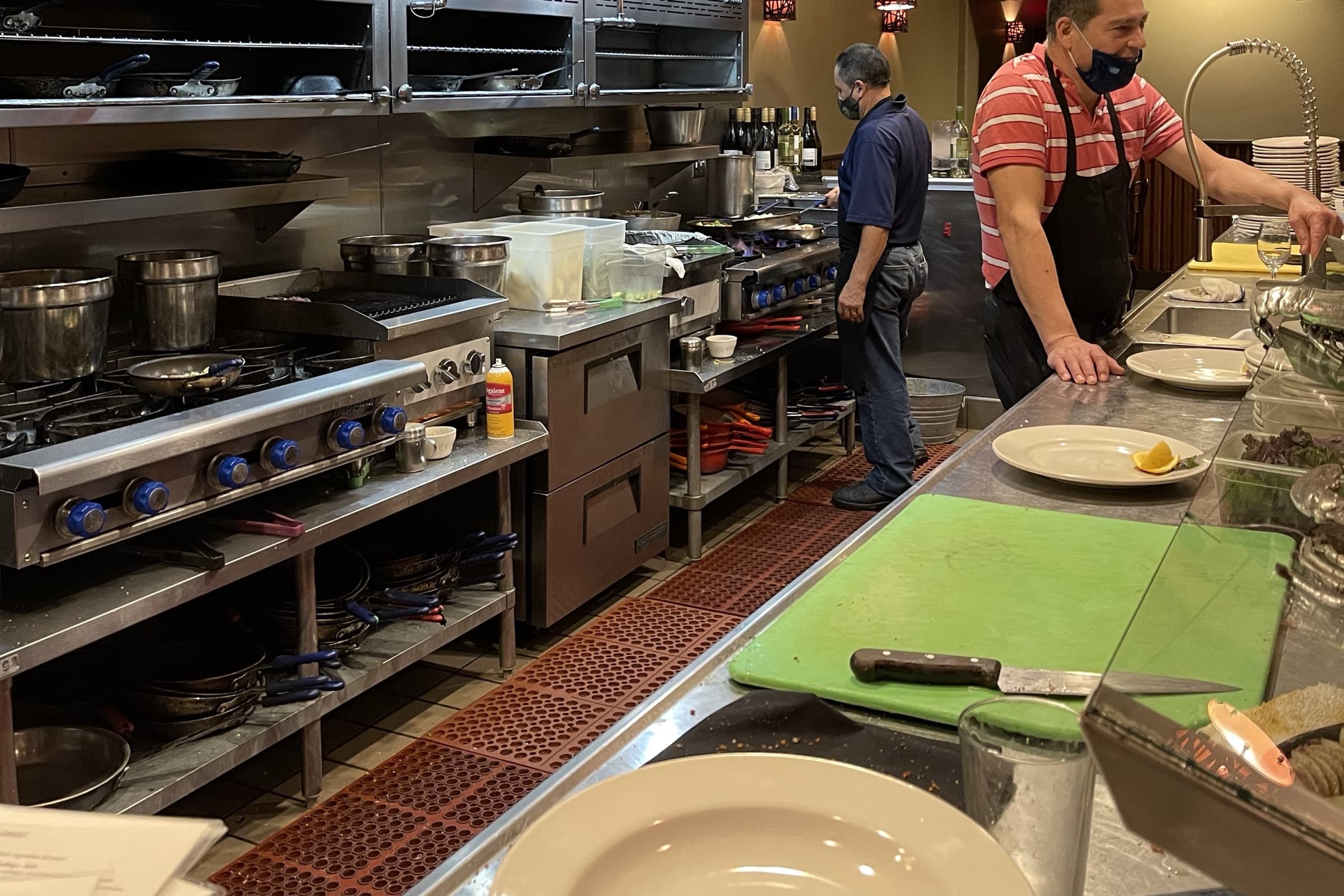
Photo by Sarah Stierch. Licensed under CC BY 4.0. Cropped and resized for web
Opening a Restaurant: What the Coverage Misses
Labor, lease math, and supply chains: the quieter work that decides whether a room lasts.
March 5, 2025
The menu reveal is the easy photograph. Behind it sits quieter work: lease terms, hood and fire-suppression costs, staffing pipelines, and the distributors who answer the phone when a kitchen is still learning how much rice a weekend burns.
Those details decide whether a room is still open in eighteen months. Coverage that only celebrates the first seating can miss the people wiping down steel at closing, and the math that lets them come back tomorrow.
Lease before romance
Industry guides keep repeating a blunt screen: occupancy costs need to fit forecast sales, often discussed in a mid-single-digit to roughly ten percent band depending on concept and city. A space that “already has a kitchen” may still need a Type I hood, grease trap upgrades, or electrical work that turns a bargain into a construction project.
Second-generation restaurant spaces can cut build-out compared with ground-up, which is why operators hunt them. RestaurantOwner.com member surveys over recent years have put median startup costs in the low-to-mid hundreds of thousands of dollars, with wide ranges. Treat those as survey snapshots among members, not a universal invoice.
Hoods, labor, and thin air
Ventilation and fire suppression are not optional aesthetics. They are cost centers that arrive before the first guest photograph. Construction overruns show up again and again in operator surveys because the hidden build-out is where budgets break.
Labor is the other quiet pressure. National Restaurant Association operations abstracts for recent years put median labor costs (wages plus benefits) around the low-to-mid thirties as a percent of sales for full-service rooms, with loss-making restaurants often running higher. Median pre-tax income for full-service operators in the same research family has landed in the low single digits. These are medians from surveyed operators, not promises.
Immigrant workers make up a substantial share of U.S. restaurant labor in industry and news estimates. Asian restaurants specifically show up in local reporting on staffing shortages, visa friction, and family succession, when children choose other careers and the next generation of cooks is harder to find.
Who answers for the rice
Broadline distributors can stock a kitchen. Specialty Asian wholesalers often stock the exact sauces, noodles, and produce cuts a menu depends on. Companies such as Wismettac and JFC, along with regional importers, sit behind many dining rooms that look independent from the street. When coverage skips suppliers, it skips the relationships that keep a menu stable when a single ingredient spikes in price.
The failure myth
The line that ninety percent of restaurants fail in the first year has been traced by researchers and reporters to marketing folklore more than careful data. Studies such as H.G. Parsa’s work and later analyses using business data find first-year closure rates that are serious and still much lower than that slogan. Definitions of failure differ. The useful correction is the same: opening is risky, and risk is not a movie statistic.
What coverage can do better is stay with the unglamorous eighteen months: rent that fits, a hood that passes, a payroll that does not eat the week, and a supplier who picks up. The first seating is a beginning. Survival is the quieter story.