
How to Host a Vietnamese Summer Roll Party
Cook the shrimp and pork ahead, set out herbs and bánh tráng, and let everyone roll gỏi cuốn at the table.
Updated July 25, 2026
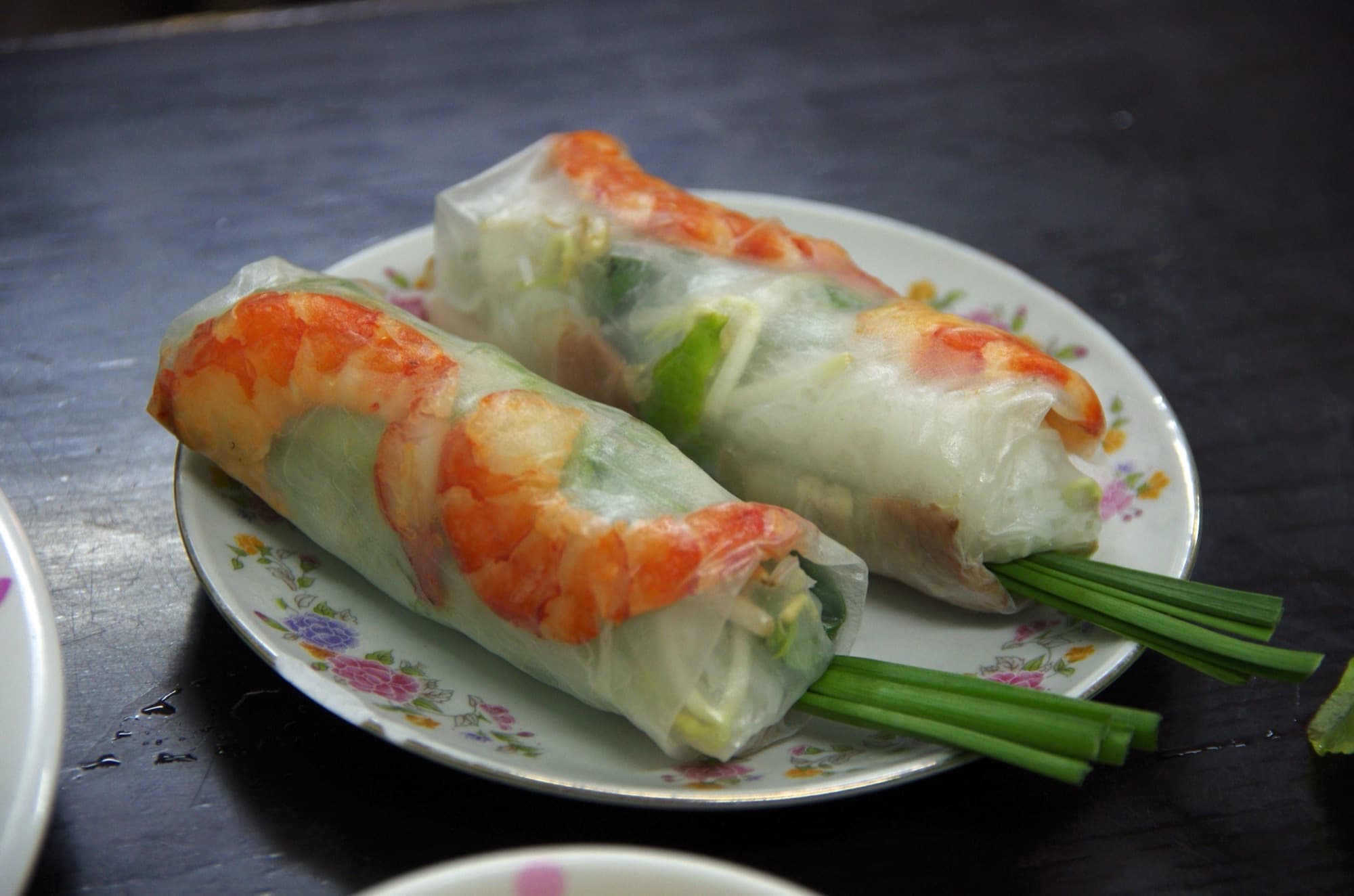
Photo by pelican. Licensed under CC BY-SA 2.0. Cropped and resized for web
A bowl of lukewarm water sits in the middle of the table. Next to it: a stack of brittle bánh tráng, a plate of shrimp halved so the pink shows through the wrapper, coils of rice vermicelli, and a pile of mint that smells like the whole evening.
That is a Vietnamese summer roll party. Guests are not waiting for you to plate twenty identical rolls in the kitchen. They wet a rice paper, fill it, roll it, dip it, and start another. You did the cooking earlier. The table does the wrapping.
In Vietnamese, the southern name is gỏi cuốn: salad, rolled. Northern menus often say nem cuốn for the same fresh roll. English menus call them summer rolls, salad rolls, or fresh spring rolls. They are not fried chả giò (south) or nem rán (north). Those are a different dish: hot, crisp, and finished in oil. Tonight is cool, herb-heavy, and built for sharing.
What kind of night this is
Think of it as cousin to a dumpling party, with less stove drama. Dumplings ask everyone to fold, then someone still has to boil or pan-fry in batches. Summer rolls ask everyone to wrap, then eat. There is no shared hot pot, no grill tongs, no fryer hissing behind you.
The classic southern plate is tôm thịt: poached shrimp, thinly sliced pork, bún (rice vermicelli), lettuce, and a serious herb mix. Mint, Thai basil, and cilantro are the easy grocery trio. Perilla and garlic chives are worth hunting at an Asian market when you can find them. Tofu, grilled chicken, or extra vegetables work for mixed diets. The host’s job is to make every component ready before the doorbell. The guests’ job is to roll.
What you finish before anyone arrives
Poach or steam shrimp until just opaque, then halve them lengthwise so a pink stripe shows through the rice paper. Simmer pork (belly or a leaner cut, depending on how rich you want the night) until tender, chill, and slice thin. Boil rice vermicelli, rinse, drain well, and coil into loose nests so people can grab a portion without a sticky mountain. Wash and dry lettuce. Pick herb leaves into bowls. Mix sauces and chill them.
Keep proteins cold until service. Put out something to drink and a small snack so the first roll is not made on an empty stomach. Clear a stretch of table for rolling boards or smooth plates. Wooden boards that drink moisture can dry a wrapper too fast; a damp, lint-free towel or a plastic board is kinder.
Table station checklist
- Shallow bowls of lukewarm water for dipping bánh tráng (one for every two or three guests is comfortable)
- Rice paper wrappers, still dry in their package until needed
- Platter of cooked shrimp and sliced pork (plus a vegetarian protein if you need one)
- Coils of drained rice vermicelli
- Lettuce leaves and bowls of mint, Thai basil, cilantro, and any extra herbs
- Optional crunch: cucumber sticks, carrot matchsticks, bean sprouts
- Individual bowls of nước chấm and/or peanut-hoisin sauce
- Damp towels for sticky fingers and a trash bowl for herb stems
How to wet the paper without wrecking it
This is the only technique that really trips first-timers. Bánh tráng should not soak until floppy in the water. Dip a round in lukewarm water for a few seconds, pull it while it still feels a little firm, and lay it flat. It softens on the board while you arrange the filling. When it feels tacky, like a Post-it you can still peel, you are ready to roll.
Hot water turns the starch gummy. Overfilling tears the sheet. Underfilling is fine. Put lettuce down first as a soft bed, then noodles, herbs, and meat. If you want the shrimp to show, set the halves near the top of the wrapper so they sit under a thin layer of paper when you finish the roll. Fold the bottom up, tuck the sides, and roll forward snugly. Different-looking rolls are part of the fun. Leaks are the only real problem.
Two sauces, individual bowls
Nước chấm is the bright dip: fish sauce, water, lime juice, sugar, garlic, and chile, adjusted until it tastes salty, sour, and a little sweet at once. Peanut-hoisin sauce is the richer cousin, often built from hoisin, peanut butter, a little water, and garlic, sometimes with chile. Households and restaurants lean different ways. Offering both covers the table.
Pour into small individual bowls. Shared sauce bowls get double-dipped fast, and leftover sauce keeps better when it has not met every roll at the party. Guests who skip fish sauce can lean on the peanut bowl or a soy-lime stand-in you mix on the side.
When the night is working
You will know the format landed when the water bowls stay busy and the host is sitting down with a roll of their own. Keep proteins chilled between waves if the evening runs long, and get leftovers into the fridge within two hours. The party succeeds when the cooking is already done, the herbs are generous, and nobody has to wait for a plated appetizer that was perfect twenty minutes ago.
If your friends already love dumpling night, this is the warm-weather answer: same communal hands, cooler kitchen, and a table that smells like mint and lime.